The shaking in your car might start as a minimal concern, but it's an issue that will likely get worse over time if you don't have a mechanic check out the car to see what's wrong. Furthermore, a problem that might be minor at first may worsen quickly, which causes additional damage to the vehicle and more expensive repairs. A few possible reasons might explain why your car is experiencing shaking and vibrating.
Engine
One place to look if your car is acting up is the engine. The engine might make the car shake as you drive, but the shaking might also begin when you start up the car. If the engine is causing issues, there may be other noises as you drive, too. One of the simplest explanations is that the air filter is not clean. The filter should appear free of dirt and contaminants. If it looks dirty on the surface, it should be cleaned or even replaced. The air filter's role is to keep contaminants from entering the engine and clogging the fuel lines. The engine's radiator might also be due for a replacement. If the engine seems to be getting too hot, the radiator may be the culprit. If the car has reached the 80,000-mile mark, have a mechanic look at the spark plugs.
Tires
The tires are another area that you should look at to figure out where the shaking is coming from. Tires must have a certain amount of tread for the car to be driven safely and properly. If they lose too much tread, the vehicle will start shaking when you drive. The shaking may also be noticeable in the steering wheel. The tires might need to be rotated as well, and a mechanic may suggest getting new ones. An alignment can also correct the problem.
Wheels
Wheels can also explain the car's shaking. Wheels have parts called lug nuts that attach the wheels onto the vehicle. If the lug nuts are not tight enough, you'll likely notice shaking that gets worse with acceleration. Damage to the wheels can result in shaking and vibrating as well.
Brakes
Unlike problems with the tires and wheels, shaking related to the brakes starts or worsens when you apply them. Over time, the brake pads' lining can get worn out or wear unevenly, which can damage the rotors. If the rotors become bent or warped as a result, the car will shake or wobble when you stop. You might notice pulling on one side as well.
Axles
The axles are an essential but fragile structure. They can become damaged easily by potholes, curbs, or speed bumps. Damage to the axles causes shaking and vibrating in the suspension system. The CV joints, which resemble boots at the axles' ends, can break and cause clunking sounds when you turn.
For expert vehicle diagnostics and repairs, contact us today.
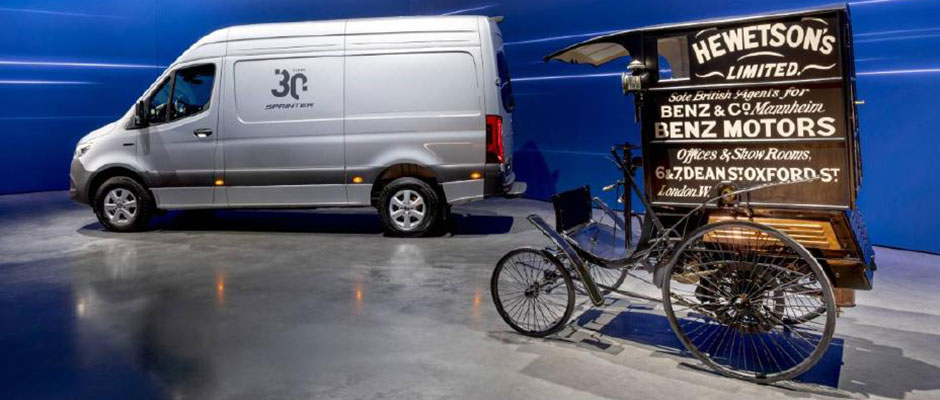
When Mercedes-Benz first introduced the Sprinter 30 years ago, it created a new segment for light commercial vehicles. From delivery services to luxury transport, the first-generation Sprinter was suitable for a wide range of uses. This van's comfortable driving characteristics, user-friendly features, and functional cargo area helped it to revolutionize the industry. It effectively bridged the gap between traditional passenger cars and heavy-duty commercial trucks. For good reason, the Sprinter quickly became a global success.
Purchase prices do not include tax, title, license and $599 admin fee. Prices include the listed incentives. Please verify all information. We are not responsible for typographical, technical, or misprint errors. Inventory is subject to prior sale. Contact us via phone or email for more details.
We use cookies and browser activity to improve your experience, personalize content and ads, and to analyze how our sites are used. For more information on how we collect and use this information, please review our Privacy Policy and Review our Terms.